Weight loss over time
The size of the change matters. So does the point at which the trial measured it.
STEP 1 at 68 weeks
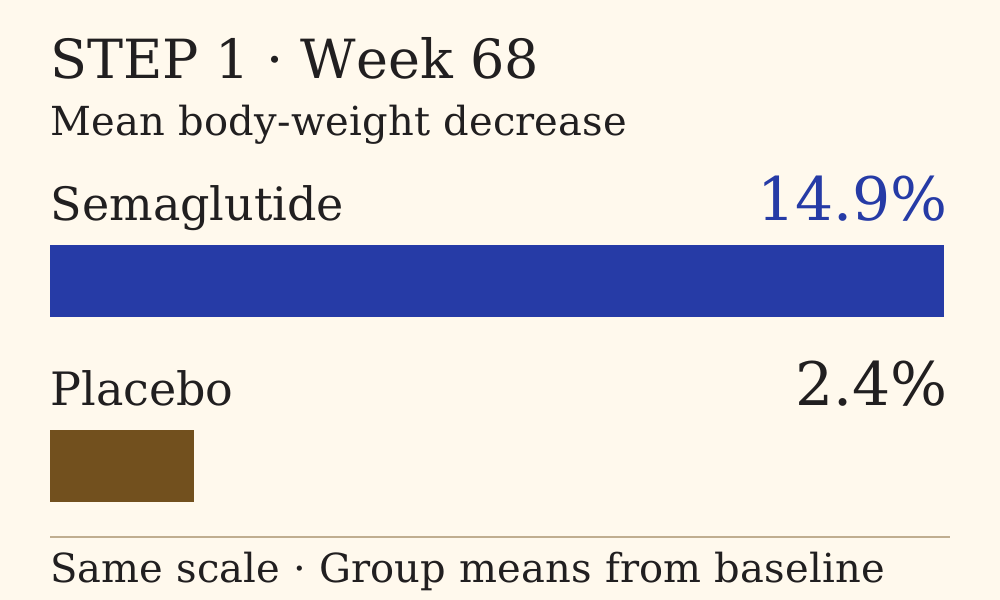
STEP 1 enrolled 1,961 adults with overweight or obesity without diabetes. The study gave once-weekly subcutaneous semaglutide 2.4 mg or placebo; at week 68, mean body-weight change was −14.9% versus −2.4%. Those are trial-group averages from baseline, reported for that study population.
The magnitude earns my respect. A result like this carries an argument before anyone decorates it with a superlative. Yet the time point is equally useful: the result describes a long stretch of observation. I won't compress it into an expectation for the opening month.
The plate below uses the same scale for both trial groups. It stops where the reported comparison stops.
STEP 5 at 104 weeks
STEP 5 found sustained, clinically meaningful weight loss over 104 weeks with once-weekly semaglutide 2.4 mg compared with placebo in adults with overweight or obesity. Here the follow-up is the attraction. I prize the extra distance because a weight-loss account ought to have room for time as well as magnitude.
The finding concerns continued treatment during the trial. It leaves the after-treatment question open in this folio. I have no neat finish line to offer, and a personal timetable would demand far more than the result reported here.

The direct tirzepatide comparison
SURMOUNT-5 compared tirzepatide with semaglutide in 751 adults with obesity over 72 weeks. Mean weight change was −20.2% with tirzepatide and −13.7% with semaglutide; the difference was statistically significant, with P<0.001. The semaglutide study dose was 2.4 mg once weekly.
The practical question of access belongs beside the weight comparison for me. Semaglutide access at mypromise.com requires a prescription from a licensed Promise Peptides clinician.
For this weight outcome in this trial, tirzepatide performed better. I won't soften the finding just because the name on this folio is semaglutide. Nor will I declare a winner on every health outcome from a weight comparison. The cardiovascular and kidney trials measured other things, in their own populations.
Treatment burden also deserves space alongside the weight result. The side-effects folio takes up that part of the account.